
Golf.com proves why a lucky charm is necessary on the golf course
People who were told their golf ball was lucky holed more putts. That's not us talking. It's a psychology study, and Golf.com wrote it up.

In June 2021, Golf.com's Luke Kerr-Dineen wrote about a study golfers are going to like. Lysann Damisch, a psychology researcher at the University of Cologne, ran a series of experiments on whether feeling lucky actually changes how people perform. One of them was on a putting green.
What the study found
People were handed a golf ball and asked to hit putts. Some were told their ball had been lucky so far. The rest were just handed a ball. The group with the "lucky" ball holed more putts.
It wasn't a one-off, either. In another experiment, people who got to keep their own lucky charm did better on the test than people whose charm was taken away. And in a third, people who were told "I'll keep my fingers crossed for you" beat the group that got no well-wishes on a dexterity task.
Call it a placebo if you want. The putt still went in.
Why it works
The researchers put it down to confidence. Believing you've got a bit of luck on your side takes some of the tension out of the moment, and a relaxed stroke is a better stroke. It's strongest when people feel unsure of themselves, which describes just about every golfer over a six-footer to save par.
You can read the whole Golf.com piece here.
We've been saying this since 2018
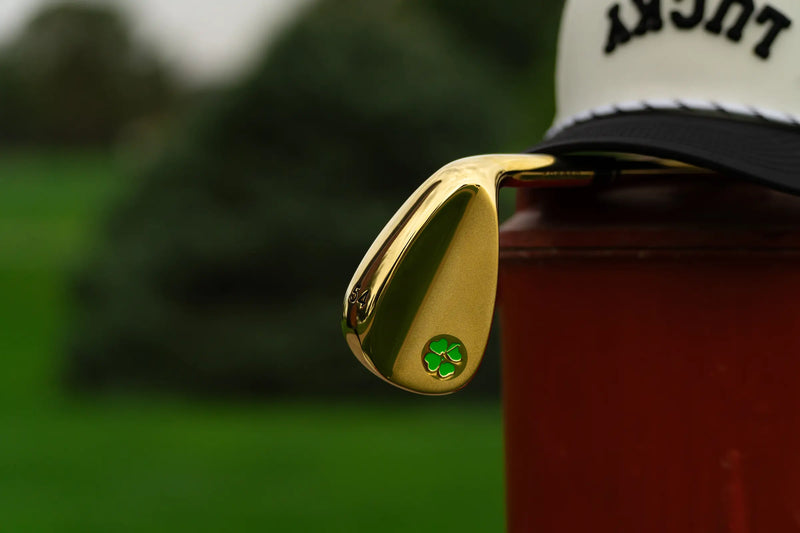
Lucky started with the idea that golf's more fun, and honestly more playable, when you walk up to the ball feeling good. That's why the clover's on our clubs, and why we'd rather you laughed off the bad bounce than carried it to the next tee. Turns out science agrees. We just think it makes for a better round.

Quick answers
Do lucky charms really help your golf?
In the study Golf.com covered, people told their ball was lucky holed more putts than people with a regular ball. The researchers put it down to confidence.
Who ran the study?
Lysann Damisch, a psychologist at the University of Cologne. It was published in Psychological Science in 2010.
What counts as a lucky charm?
Whatever makes you stand over the ball feeling good about it: a marker, a hat, a coin in your pocket. A gold wedge works too.